
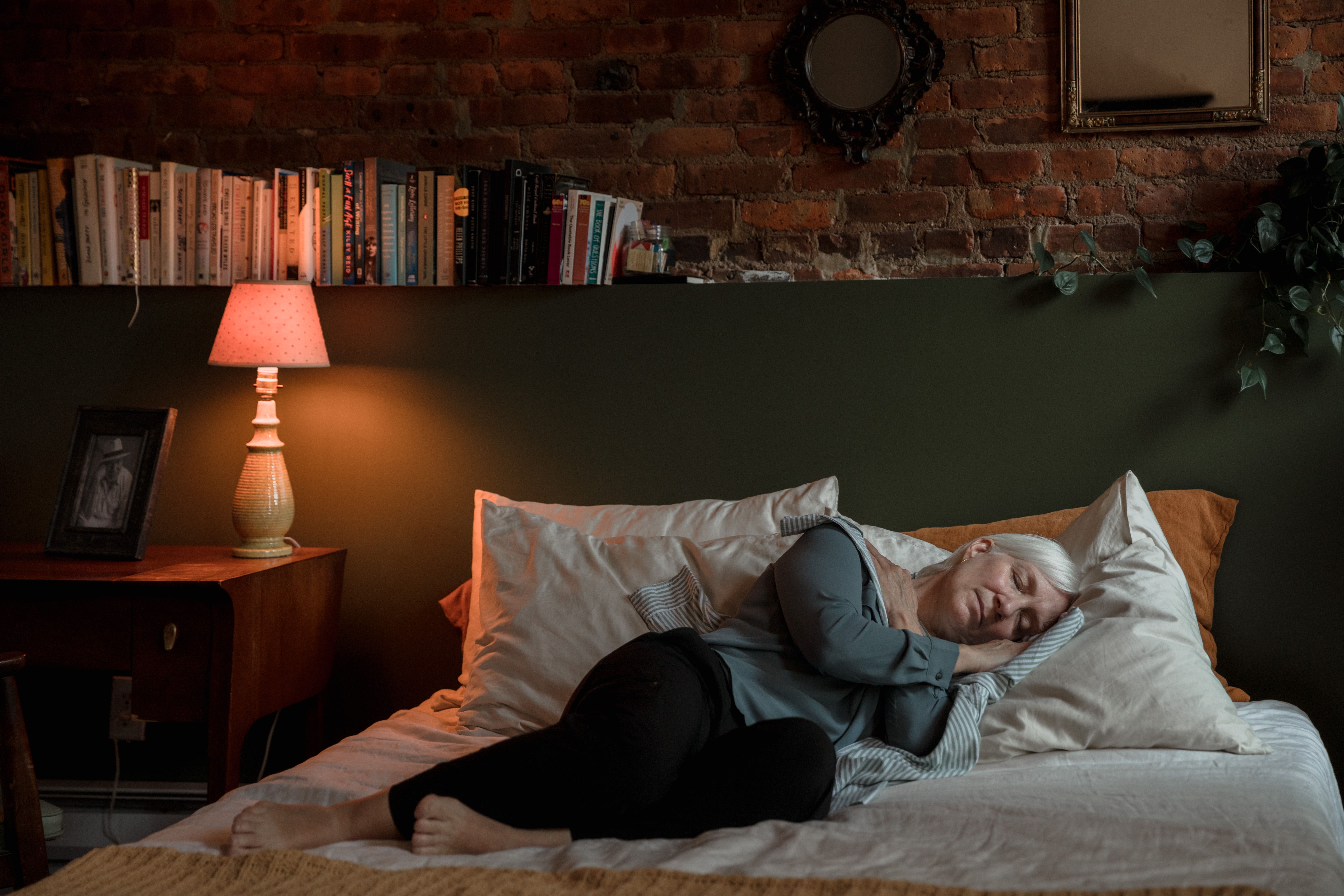
Unlock peak cognitive function, robust immunity, and accelerated physical recovery by mastering the science of deep sleep. This deep dive into NREM Stage 3 sleep explores its vital role in overall health, debunks common myths, and provides actionable, evidence-based strategies, including a comprehensive comparison of cutting-edge sleep technologies and nutritional aids, to help you maximize your sleep quality investment in 2026 and beyond.
Introduction to the Topic
In an increasingly demanding world where hustle culture often glorifies sleepless nights, the true value of sleep is frequently overlooked. Yet, as we accelerate into 2026, the scientific community continues to underscore a critical truth: sleep isn't merely a passive state of rest, but an active, vital process, and within it, deep sleep stands as the undisputed champion of restoration. It's not just about the hours you spend in bed; it's about the quality of those hours, particularly the precious cycles dedicated to deep sleep.
Think of your sleep as an investment portfolio for your health. While all stages contribute, deep sleep is your high-yield asset, delivering unparalleled returns in cognitive function, physical recovery, immune resilience, and emotional well-being. Neglecting this crucial phase is akin to letting your most valuable assets languish, leading to a slow but steady erosion of your health reserves. This article will illuminate the profound science behind deep sleep, equipping you with the knowledge and tools to maximize this indispensable investment for a healthier, more vibrant life.
Backgrounds & Facts
To truly appreciate deep sleep, we must first understand its place within the intricate architecture of our nocturnal journey. A typical night's sleep cycles through distinct stages: Non-Rapid Eye Movement (NREM) sleep, divided into N1 (light sleep), N2 (deeper sleep), and N3 (deep or slow-wave sleep), followed by Rapid Eye Movement (REM) sleep. Deep sleep, specifically NREM Stage 3 (often combined with Stage 4 in older classifications, now simply N3), is characterized by the slowest brain waves, known as delta waves. It's during this phase that your brain activity slows dramatically, your muscles relax, and your heart rate and breathing become the most regular and slowest of any sleep stage.
Why is this period so crucial? Deep sleep is the primary time for physical restoration and cellular repair. Your body ramps up the production and release of human growth hormone (HGH), essential for tissue repair, muscle growth, and bone health. It's also when the brain's glymphatic system kicks into high gear, effectively flushing out metabolic waste products, including amyloid-beta proteins linked to neurodegenerative diseases. Memory consolidation, particularly for declarative memories (facts and events), heavily relies on deep sleep, transferring information from temporary storage in the hippocampus to more permanent archives in the neocortex. Furthermore, a robust immune system is deeply intertwined with adequate deep sleep, as it supports the production of cytokines and T-cells vital for fighting off infections.
On average, adults need about 15-25% of their total sleep time to be in deep sleep. This percentage tends to decrease with age, making it an even more vital focus for older adults. Insufficient deep sleep isn't just about feeling groggy; it has significant long-term consequences. Chronic deprivation is linked to impaired cognitive function, reduced learning capacity, increased risk of type 2 diabetes, obesity, cardiovascular disease, and heightened susceptibility to mood disorders like depression and anxiety. Understanding these fundamental facts is the first step toward reclaiming your health through optimized sleep.
Expert Opinion / Analysis
Leading sleep scientists and neurologists universally agree on the irreplaceable role of deep sleep. Dr. Matthew Walker, a renowned neuroscientist and author of "Why We Sleep," consistently emphasizes that "deep sleep acts like a 'reset button' for the brain, clearing out the metabolic byproducts that accumulate during wakefulness and strengthening neural connections essential for learning and memory." The slow-wave activity characteristic of deep sleep is a hallmark of brain recovery and plasticity.
The mechanisms behind deep sleep's benefits are complex and fascinating. Research indicates that the synchronized slow-wave oscillations during N3 sleep facilitate the consolidation of new memories and the pruning of less important neural connections, optimizing brain efficiency. Furthermore, the robust release of growth hormone during deep sleep is not just for children; in adults, it's crucial for maintaining muscle mass, bone density, and metabolic health. Disruptions to this hormonal release can have cascading negative effects on metabolism and body composition.
Several factors can profoundly impact your ability to achieve sufficient deep sleep. Age is a primary determinant, with deep sleep naturally declining after early adulthood. Lifestyle choices play an enormous role: irregular sleep schedules, excessive caffeine or alcohol consumption (especially close to bedtime), chronic stress, and lack of physical activity can all suppress slow-wave sleep. Environmental factors such as light exposure (particularly blue light before bed), noise, and an unoptimized bedroom temperature are also significant culprits. Moreover, underlying health conditions like sleep apnea, restless legs syndrome, and chronic pain can severely fragment sleep, preventing entry into or maintenance of deep sleep stages.
Experts advocate for a multi-pronged approach to enhance deep sleep, combining rigorous sleep hygiene practices with targeted biohacking strategies. This includes establishing a consistent sleep schedule, creating a conducive sleep environment, managing stress through mindfulness or meditation, and optimizing diet and exercise. The goal is not just to sleep more, but to sleep better, ensuring your body and brain receive the profound restorative benefits of deep sleep.
Best Options in Comparison
Investing in your deep sleep quality is one of the most impactful decisions you can make for your long-term health. The market in 2026 offers a plethora of tools and strategies, ranging from advanced technology to fundamental lifestyle adjustments. Here, we compare some of the most effective options to help you make informed choices.
Advanced Sleep Trackers & Wearables
These devices have evolved significantly, moving beyond simple step counting to provide sophisticated insights into your sleep architecture, including estimations of deep sleep duration. While not medical devices, their consistent use can help identify patterns and the impact of lifestyle changes.
- Oura Ring (Gen 3): Worn on the finger, it tracks heart rate variability (HRV), body temperature, and movement to provide detailed sleep staging, including deep sleep, REM, light, and wake times. It offers a daily readiness score and personalized insights.
- WHOOP 4.0: A wrist-worn strap that focuses on recovery, strain, and sleep. It tracks sleep stages, HRV, and respiratory rate, providing actionable coaching based on your physiological data.
Smart Sleep Environments & Devices
These solutions actively modify your sleep environment to optimize conditions for deeper, more restorative sleep. They leverage technology to create ideal temperature, light, and sound conditions.
- Eight Sleep Pod 3: A smart mattress cover that dynamically heats and cools both sides of the bed throughout the night based on your body temperature and sleep stage. It also offers sleep tracking and a gentle wake-up alarm.
- ChiliSleep (now SleepMe) Dock Pro/Ooler Sleep System: Uses a hydro-powered pad to circulate water through your mattress, allowing precise temperature control from 55-115°F (13-46°C). Optimal core body temperature regulation is critical for deep sleep.
To further aid your decision, here's a detailed comparison of various deep sleep enhancement tools and strategies:
| Option Category | Primary Benefit | Mechanism | Pros | Cons | Target User | Estimated Cost (USD) |
|---|---|---|---|---|---|---|
| Advanced Sleep Trackers (e.g., Oura Ring Gen 3, WHOOP 4.0) | Insightful Data & Trend Analysis | Optical heart rate, HRV, accelerometer, temperature sensors to estimate sleep stages. | Non-invasive, personalized feedback, identifies patterns, motivates behavioral change. | Estimates, not medical-grade accuracy; requires consistent wear; subscription fees often apply. | Data-driven individuals, wellness enthusiasts, those seeking to understand sleep patterns. | $299-$399 + $6-30/month subscription |
| Smart Temperature Regulation (e.g., Eight Sleep Pod 3, SleepMe Dock Pro) | Optimal Sleep Environment | Active heating/cooling of mattress surface to maintain ideal core body temperature. | Directly addresses a key factor for deep sleep; personalized temperature zones; often includes tracking. | High initial investment; requires maintenance (water refills); may not suit all mattress types. | Individuals struggling with temperature regulation during sleep, biohackers, couples with different temperature preferences. | $1,500-$3,000+ |
| Sound Machines & White Noise Generators (e.g., Hatch Restore, LectroFan) | Noise Masking & Relaxation | Provides consistent, soothing background noise (white, pink, brown noise) or guided meditations. | Affordable, simple to use, blocks disruptive noises, aids relaxation. | Doesn't address underlying sleep issues; may not be effective for all noise types. | Light sleepers, those in noisy environments, individuals seeking pre-sleep relaxation. | $30-$130 |
| Blue Light Blocking Glasses (e.g., Swanwick Sleep, RA Optics) | Melatonin Optimization | Filters out blue light wavelengths that suppress melatonin production. | Relatively inexpensive, non-invasive, effective for evening screen use. | Requires consistent use 2-3 hours before bed; may alter color perception. | Screen users, night shift workers, anyone struggling with pre-sleep light exposure. | $40-$150 |
| Targeted Nutritional Supplements (e.g., Magnesium L-Threonate, Apigenin, L-Theanine) | Neurotransmitter & Relaxation Support | Magnesium aids GABA receptors; Apigenin acts as a mild sedative; L-Theanine promotes alpha brain waves. | Can be effective for some, relatively low cost, easily incorporated. | Individual efficacy varies; always consult a doctor; potential side effects; not a substitute for healthy habits. | Individuals with mild sleep difficulties, those seeking additional support (under medical guidance). | $15-$50/month |
| Meditation & Mindfulness Apps (e.g., Calm, Headspace, Muse Headband) | Stress Reduction & Brainwave Training | Guided meditations, breathwork, biofeedback (Muse) to promote relaxation and calm brain activity. | Non-pharmacological, improves stress resilience, accessible, can be combined with other strategies. | Requires consistent practice; results may not be immediate; some apps have subscription fees. | Individuals with stress-induced sleep issues, those seeking mental calm before bed. | Free-$70/year (app) / $250-$400 (Muse headband) |
Outlook & Trends
The landscape of sleep science and technology is rapidly evolving, promising even more personalized and effective solutions for deep sleep optimization in the coming years. In 2026, we're seeing a strong trend towards integrating AI and machine learning into sleep tracking, moving beyond mere data collection to predictive analytics and real-time intervention. Imagine a future where your smart mattress or wearable not only tracks your sleep but also adjusts your bedroom environment or delivers personalized audio cues to gently guide you into deeper sleep cycles.
Neurofeedback and neurostimulation devices, currently niche, are expected to become more mainstream. Devices like transcranial direct current stimulation (tDCS) or acoustic stimulation are being researched for their potential to enhance slow-wave activity during sleep. Furthermore, genetic research is beginning to uncover individual predispositions to sleep patterns and needs, paving the way for truly personalized sleep medicine. This could mean tailored dietary recommendations, specific supplement protocols, or even customized light therapy based on your unique genetic makeup.
The medical community is also increasingly recognizing sleep as a critical pillar of health, alongside diet and exercise. This shift will likely lead to more widespread screening for sleep disorders, greater integration of sleep specialists into primary care, and a focus on preventative sleep health rather than just reactive treatment. The future of deep sleep optimization points towards a holistic, data-driven, and highly personalized approach, empowering individuals to unlock their full restorative potential.
Conclusion
Deep sleep is not a luxury; it is a biological imperative and a cornerstone of vibrant health. Investing in its quality yields profound returns across every aspect of your life, from sharpened cognition and robust immunity to accelerated physical recovery and emotional resilience. As we navigate the complexities of modern living in 2026, prioritizing deep sleep is no longer an option but a necessity for thriving. By understanding its science, embracing evidence-based strategies, and leveraging the innovative tools available, you can unlock the transformative power of truly restorative sleep. Make the commitment today to maximize your deep sleep investment – your healthier, happier future depends on it.