
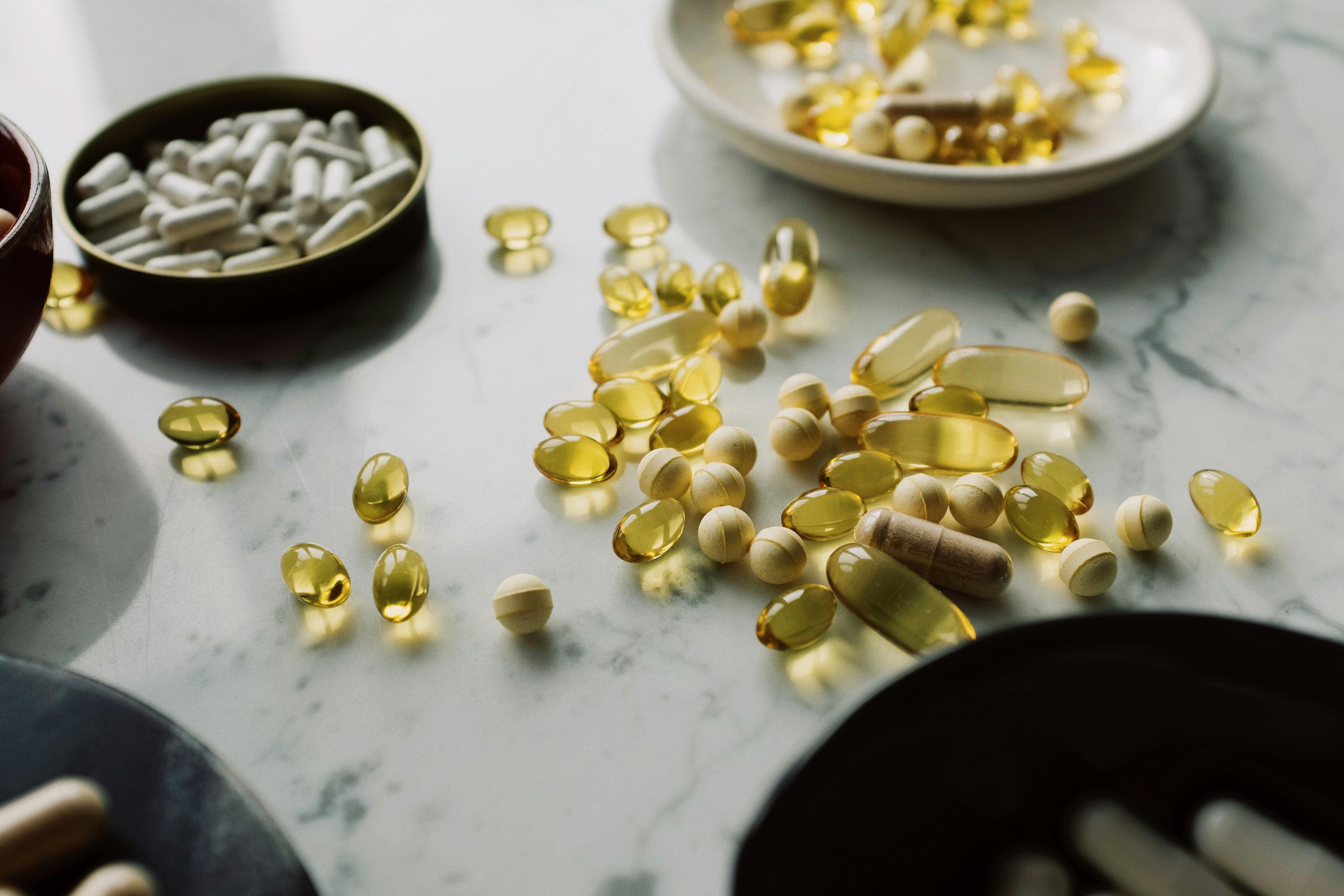
Two products can list the same milligram figure for the same nutrient and deliver very different amounts into the bloodstream. Bioavailability is the term for that gap, and it has identifiable causes.
The label number is the dose, not the delivery
What a label states is the quantity of a compound in the capsule. What matters physiologically is the quantity that reaches circulation in an active form.
Bioavailability is the fraction that makes the journey, expressed relative to what would reach the blood if the compound were injected directly.
Anything taken by mouth faces a series of barriers that an injection bypasses, and each one removes some of the dose.
Dissolution comes before absorption
A compound cannot be absorbed until it dissolves in intestinal fluid. Poorly soluble forms may pass through largely intact.
This is the reason different salts and chelates of the same mineral behave differently: the mineral is identical, but the compound's solubility is not.
Particle size and the tablet's binding agents matter for the same reason, because they govern how fast the material breaks apart.
The gut wall is selective, not porous
Absorption often depends on specific transport proteins in the intestinal lining, and those transporters can be saturated.
Once saturated, a larger dose no longer produces a proportionally larger uptake, which is why some nutrients are absorbed less efficiently at high single doses than at smaller divided ones.
Other substances in the gut compete for the same transporters, which is the mechanism behind several well-documented nutrient interactions.
The liver acts before the body sees the dose
Blood leaving the intestine travels to the liver before entering general circulation. Liver enzymes may metabolise a substantial portion on that first pass.
A compound heavily processed this way can show low bioavailability even when absorption from the gut was efficient.
Fat-soluble vitamins take a partly different route through the lymphatic system, which is why their absorption depends on the presence of dietary fat.
Higher bioavailability is not automatically better
A more bioavailable form delivers more of the same compound, which changes the effective exposure even when the label figure is unchanged.
Comparisons between forms are also frequently made by manufacturers, using measures and conditions that vary, so headline claims are not directly comparable between products.
Anyone taking prescribed medication should raise supplement questions with a pharmacist or doctor, since these same absorption and metabolism pathways are where interactions occur.